
custom car seats
Custom Car Seats: A Guide to Bespoke Trim, Materials & Fit
Transform your driving experience with premium custom car seats. Explore our guide on bespoke trim, luxury materials, and the perfect fit for your vehicle today.
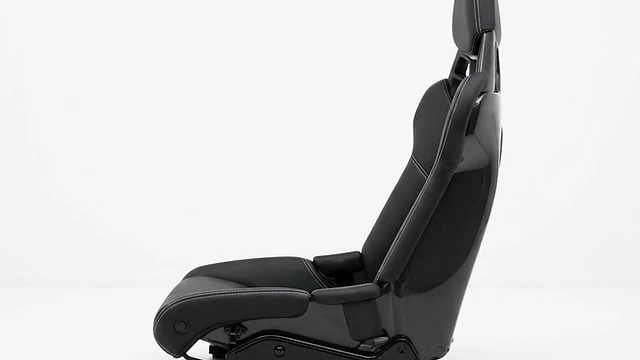
What are custom car seats?
At their core, custom car seats transcend the mass-produced factory standard by integrating bespoke ergonomics, high-performance materials, and individualized aesthetic tailoring. Unlike OEM seats, which are engineered for the "average" driver to satisfy broad safety and cost metrics, custom seating is purpose-built to the specific anatomical requirements and driving objectives of the owner.
The Engineering Behind the Build
A true custom seat begins with a reinforced, lightweight structure—frequently utilizing autoclave-cured carbon fiber for an exceptional strength-to-weight ratio. This chassis acts as the foundation for the seat’s geometry, which must balance lateral support for high-G cornering with long-distance comfort.
When commissioning custom car seats, you are selecting specific variables that define your driving experience:
- Materials: Aerospace-grade Alcantara provides superior tactile grip for track applications, while top-grain Nappa leather offers a refined, supple finish for grand touring.
- Dimensions: Seats are measured for hip width, torso length, and shoulder breadth, ensuring the bolsters sit exactly where they can provide maximum stability without restricting movement.
- Safety Standards: Premium bespoke seats undergo rigorous testing, often meeting FIA or SFI certification standards to ensure structural integrity during high-impact events.
The Performance Trade-off
The primary trade-off in custom seat design is the balance between ingress/egress ease and restrictive bolstering. A racing-focused bucket seat features high, rigid side bolsters to prevent shifting, which can complicate entry in street-driven vehicles. By contrast, a bespoke performance seat designed for daily use incorporates variable-density foam padding and adjustable lumbar support, maintaining the necessary cockpit feel while preserving comfort for extended highway sessions. Ultimately, these seats transform the driver’s interface, creating a precise, tactile connection between the human body and the vehicle’s chassis dynamics.
Materials: Nappa leather, Alcantara, OEM-match
When engineering custom car seats, the choice of materials dictates both structural longevity and thermal performance. At AMX Performance, we prioritize materials that balance tactile luxury with the rigorous demands of high-G cornering.
Nappa Leather vs. Alcantara
- Nappa Leather: We exclusively utilize full-grain, chrome-tanned Nappa hides. Unlike corrected-grain leathers, Nappa retains its natural surface texture, providing superior breathability and a supple hand-feel. It is resistant to abrasion but requires periodic conditioning to maintain its elasticity in extreme cabin temperature fluctuations.
- Alcantara: This synthetic microfiber is the industry standard for motorsport applications. With a high friction coefficient, Alcantara prevents occupant sliding during lateral acceleration. Its fire-retardant properties and lightweight profile make it ideal for performance-focused builds where every ounce counts.
The Precision of OEM-Match
Achieving a cohesive aesthetic in a custom cabin depends on perfect material continuity. Our OEM-match process involves spectrophotometric color analysis to ensure our premium hides and suedes align precisely with factory dashboard stitching and door cards. We account for specific OEM grain patterns, such as pebble-texture or smooth-hide finishes, to ensure that our bespoke seats appear as an factory-integrated upgrade rather than an aftermarket addition.
Technical considerations also include material thickness. We typically employ 1.2mm to 1.4mm thicknesses for leather, which balances durability with the flexibility needed for intricate bolster wrapping. For Alcantara, we utilize high-density backing to prevent stretching over deep-bucket seat foam. By combining these elite materials, we ensure your custom car seats maintain structural integrity and a bespoke appearance for years, whether utilized for track-day performance or long-distance grand touring comfort.
Bucket, sport, and touring seat styles
Selecting the right geometry for custom car seats is a balance of lateral support, ergonomic alignment, and intended usage. At AMX Performance, we tailor these architectural foundations to your specific driving profile.
Bucket Seats
True fixed-back bucket seats prioritize maximum lateral retention. Designed for track-focused performance, these shells are typically constructed from carbon fiber or glass-reinforced plastic (GRP) to maintain a rigid structure under high-G cornering loads. While they offer minimal adjustability, the slim profile allows for low-center-of-gravity seating positions, providing superior chassis feedback. They are ideal for high-speed track days, though they require careful consideration of harness routing and roll-cage clearance.
Sport Seats
Sport seats represent the equilibrium between daily drivability and aggressive driving. Unlike fixed-back buckets, these feature reclining mechanisms and adjustable headrests, often maintaining compatibility with OEM side-impact airbags. They provide significant side bolstering at the thighs and torso, ensuring you stay planted during spirited canyon runs while offering enough comfort for long-distance travel. We frequently upgrade these with high-density foam and Alcantara inserts to prevent occupant sliding.
Touring Seats
Touring styles emphasize anatomical support for extended endurance. These seats prioritize lumbar integration and wider seat bases to reduce pressure points during multi-hour journeys. While they possess less aggressive bolstering than track-oriented designs, they utilize premium materials like perforated Nappa leather and heating elements to enhance interior refinement.
- Fixed-Back: Rigid support; optimal for circuit use and safety harnesses.
- Reclining Sport: Versatile geometry; ideal for dual-purpose road and track vehicles.
- Touring: Ergonomic focus; maximum comfort for grand touring applications.
Whether you prioritize track-day weight savings or grand-touring luxury, choosing the correct style is the foundation of any bespoke seating configuration.
Contrast stitching, quilting & embossing
When engineering custom car seats, the interior aesthetic is defined by the technical precision of surface detailing. At AMX Performance, we utilize specialized industrial sewing machines capable of consistent, high-tension stitching. For contrast stitching, we recommend bonded nylon or polyester threads; these materials offer superior UV resistance and high tensile strength, ensuring the seat maintains its structural integrity under the thermal stress of a track environment.
Precision Quilting Patterns
Quilting is not merely decorative; it serves a structural purpose by securing the Nappa leather or Alcantara to the high-density foam backing, preventing fabric sagging over time. Our atelier standardizes a 3mm to 5mm foam backing thickness for diamond or hexagonal quilting to ensure consistent relief depth. Key considerations for bespoke quilting include:
- Needle Gauge: We select needles based on hide thickness to prevent over-perforation, which can lead to tearing under lateral G-loads.
- Thread Weight: Utilizing Tex-70 or Tex-90 thread provides the perfect balance between visual prominence and fatigue resistance.
- Pattern Alignment: Laser-guided templates ensure pattern symmetry across the bolsters, essential for a professional OE-plus finish.
Embossing and Branding
For subtle customization, heat-press embossing remains the gold standard. By applying controlled thermal energy and pressure, we create a permanent, debossed texture into the leather surface. Unlike screen printing, embossing preserves the natural grain and breathability of the material. For optimal results, we limit embossing depths to 1.5mm to avoid compromising the structural tension of the hide. Whether integrating a racing team logo or a bespoke monogram, these fine details distinguish high-end custom car seats from mass-produced factory alternatives, transforming the cockpit into a refined extension of the driver's personality.
Heated and ventilated custom seats
Integrating climate control into custom car seats requires a delicate balance between structural integrity and thermal efficiency. At AMX Performance, we utilize high-density, open-cell polyurethane foam cores specifically engineered with precision-cut ventilation channels. These channels facilitate laminar airflow, ensuring consistent thermal distribution without compromising the seat’s lateral support or ergonomic profile.
Thermal Engineering and Material Integration
For heating, we employ carbon-fiber heating elements rather than traditional wire coils. These provide superior durability, faster warm-up times, and a uniform heat signature across the lumbar and bolster regions. When integrated into bespoke upholstery, these elements are positioned to avoid contact with high-stress tension points, preventing premature wear of the Nappa leather or Alcantara.
Ventilation performance relies heavily on material breathability. Key technical considerations include:
- Perforation Density: We utilize laser-perforated hides with a calibrated hole diameter, typically 1.2mm to 1.5mm, to ensure optimal CFM (cubic feet per minute) airflow while maintaining structural tear strength.
- Spacer Mesh Layers: A 3D-knitted spacer fabric is placed beneath the top-grain leather, creating a plenum chamber that allows moisture-wicking and active cooling air to circulate without restriction.
- Fan Sizing and Placement: We utilize ultra-quiet, brushless axial fans integrated directly into the seat base, decoupled via vibration-dampening rubber mounts to eliminate audible cabin noise.
The primary trade-off involves thickness; adding cooling hardware can slightly increase the seat base height by 10mm to 15mm. However, our custom design process accounts for these dimensions during the shell fabrication stage. By precisely milling the carbon fiber base, we ensure that adding these climate-controlled features does not negatively impact the driver's seating position or center of gravity.
How to commission custom car seats
Commissioning custom car seats is an exercise in balancing ergonomics, weight distribution, and material science. To begin, we perform a static analysis of your vehicle’s chassis geometry and your unique physical profile. Proper seat placement is governed by the H-point (Hip point), which dictates your center of gravity and spatial relationship to the steering wheel and pedal box.
The Bespoke Process
- Chassis Mapping: We measure available cabin volume to ensure the seat shell dimensions—specifically shoulder width and hip bolsters—adhere to safety standards while maximizing lateral support.
- Structural Selection: Clients choose between aerospace-grade carbon fiber weaves. A high-modulus layup provides maximum rigidity for track-focused applications, while a balanced resin-infusion process offers superior vibration damping for grand touring comfort.
- Material Specification: We source automotive-grade Nappa leather for its consistent grain and tensile strength, or Alcantara for its superior friction coefficient, which prevents driver sliding during high-G maneuvers.
During the consultation, we analyze trade-offs between padding density and tactile feedback. Racing seats utilize high-density closed-cell foam to reduce weight and maintain structural integrity under high-frequency oscillations. Conversely, street-oriented custom car seats incorporate a multi-layer dual-density foam stack, balancing long-distance comfort with supportive bolstering.
Finally, we address trim finishes—French stitching, perforated inserts, and custom embroidery. Every seam is double-stitched using UV-resistant, fire-retardant thread that meets stringent FIA or SFI standards if required. By integrating precise volumetric measurements with elite-tier upholstery techniques, we ensure your bespoke cockpit solution is not merely an aesthetic upgrade, but a precision-engineered component that fundamentally transforms the vehicle's driving dynamics and human-machine interface.