
carbon fiber racing seats
Carbon Fiber Racing Seats: Weight, Strength & FIA Homologation
Discover why carbon fiber racing seats are the ultimate upgrade for your vehicle. Learn how weight reduction, strength, and FIA homologation ensure track performance.
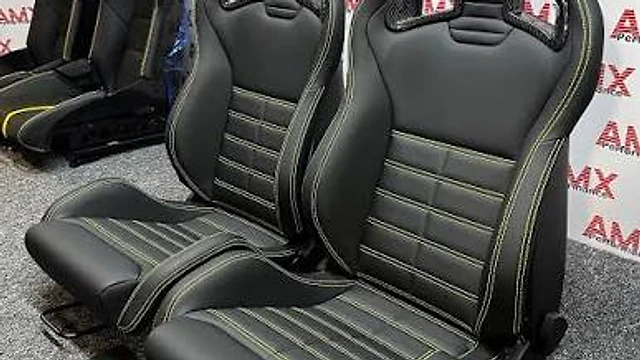
Why carbon fiber for racing seats
The pursuit of podium-topping performance relies on the fundamental principles of physics: power-to-weight ratio and structural rigidity. Carbon fiber racing seats represent the pinnacle of cockpit engineering, utilizing aerospace-grade composite materials to achieve performance benchmarks that traditional steel or aluminum shells simply cannot match.
The Science of Performance Materials
Unlike standard automotive seating, a bespoke racing shell must withstand immense G-forces during high-speed cornering while maintaining occupant safety. Carbon fiber—specifically autoclaved pre-preg weave—offers a superior strength-to-weight ratio. By layering carbon cloth at precise 0/45/90-degree orientations, engineers can tune the seat’s stiffness to eliminate chassis flex, ensuring the driver remains perfectly anchored.
- Unrivaled Weight Reduction: A professional-grade carbon shell can weigh under 5kg, significantly lowering the vehicle’s center of gravity compared to heavy OEM frames.
- Structural Integrity: The high modulus of carbon fiber prevents deformation during extreme lateral loads, providing the tactile feedback necessary for elite-level racing.
- Crash Safety: High-quality composite matrices are engineered to absorb kinetic energy through controlled delamination, protecting the driver in high-impact events.
The Technical Trade-off
While the weight savings are transformative, integrating carbon fiber requires precision. AMX Performance focuses on optimizing the ergonomic profile to account for the lack of inherent damping in rigid composites. By balancing thin-wall construction with reinforced mounting points, we ensure that our carbon fiber racing seats meet the rigorous demands of endurance racing without compromising pilot comfort. The resulting architecture is not merely a component; it is an extension of the chassis, transforming the human-machine interface into a singular, highly responsive instrument designed for the absolute pursuit of lap-time supremacy.
How carbon fiber seat shells are made
The manufacturing of professional-grade carbon fiber racing seats is a precise marriage of aerospace-grade materials and exhaustive engineering. The process begins with the selection of high-modulus carbon fiber fabric, typically woven into a 2x2 twill pattern for its superior drape and structural consistency over complex, compound-curved molds.
The Lamination and Curing Process
At AMX Performance, we utilize a vacuum-bagging technique or, for our highest-performance shells, an autoclave curing process. This ensures maximum fiber-to-resin ratio and eliminates structural voids. The steps include:
- Precision Layup: Layers of pre-preg carbon fiber are meticulously oriented at specific angles—0°, 45°, and 90°—to optimize directional stiffness and impact energy absorption.
- Vacuum Consolidation: A vacuum bag is applied to the layup, exerting atmospheric pressure to compress the resin into the fiber matrix, ensuring a defect-free shell.
- Autoclave Curing: The shell is subjected to high heat and pressure (typically 6-8 bar) in an autoclave, triggering a cross-linking reaction that produces the industry's highest strength-to-weight ratio.
Once cured, the shells are CNC-trimmed to precise dimensions, ensuring consistent mounting points that comply with stringent FIA mounting standards. The trade-off between weight and rigidity is managed by varying the laminate schedule; thicker, multi-axial reinforcements are placed in high-load areas—such as the shoulder harness guides and seat base—while non-structural sections are kept thin to shave every possible gram. This rigorous manufacturing protocol ensures that every seat is not merely a component, but a life-saving structural element designed to withstand the violent G-forces experienced in elite circuit racing environments, all while providing the uncompromising support required for championship-level performance.
Weight savings vs fiberglass and steel
For competitive drivers and track enthusiasts, mass is the enemy of performance. When evaluating seating options, the transition from traditional steel-frame or fiberglass-reinforced plastic (FRP) shells to carbon fiber racing seats represents a significant optimization in unsprung weight and vehicle balance. Understanding the material science behind these choices reveals why carbon fiber remains the pinnacle of racing ergonomics.
Comparative Material Dynamics
Standard steel-frame seats, while cost-effective, often exceed 20kg due to their heavy-gauge metal structures and dense foam padding. Fiberglass (FRP) offers an improvement, typically landing between 12kg and 15kg. In contrast, premium carbon fiber racing seats engineered by AMX Performance can weigh as little as 4kg to 7kg, depending on the specific shell geometry and FIA homologation requirements.
- Structural Efficiency: Carbon fiber boasts the highest strength-to-weight ratio of the three materials, allowing for thinner, more rigid shells without compromising occupant safety during high-G impacts.
- Reduced Moment of Inertia: Lowering the seat weight closer to the chassis floor lowers the center of gravity, directly improving turn-in response and transition speeds.
- Vibration Damping: Unlike steel, which can transmit chassis vibration, carbon fiber’s weave structure offers superior harmonic dampening, reducing driver fatigue during endurance events.
While fiberglass remains a popular choice for grassroots entry, it is inherently isotropic and prone to fatigue over time. Carbon fiber, specifically utilizing a pre-preg vacuum-autoclaved process, provides a superior anisotropic matrix. This ensures that the shell remains rigid under lateral loads, providing the precise tactile feedback required at the limit of adhesion. By choosing carbon fiber, drivers shed critical kilograms exactly where it matters most, optimizing the power-to-weight ratio for a distinct competitive advantage on the circuit.
FIA homologation for carbon seats
For professional motorsport, carbon fiber racing seats must adhere to rigorous safety standards set by the FIA, primarily under the 8855-1999 or the more modern 8862-2009 homologation criteria. These standards serve as the benchmark for structural integrity, ensuring that seats can withstand massive kinetic energy during high-speed impacts without catastrophic failure.
Understanding FIA Standards
The FIA 8862-2009 standard, in particular, demands a significant leap in crash-test performance compared to older iterations. Seats must survive forces exceeding 70G in controlled laboratory testing. To achieve this, AMX Performance utilizes advanced vacuum-infusion processes that ensure consistent resin-to-fiber ratios, eliminating weak points often found in lower-quality composite manufacturing.
- Structural Integrity: FIA-approved seats are subjected to dynamic sled testing to evaluate side-impact resistance and harness load distribution.
- Material Specifications: Only high-modulus, aerospace-grade weaves are permitted to maintain the seat’s shell geometry under peak mechanical stress.
- Weight vs. Strength: While carbon fiber offers an unrivaled strength-to-weight ratio, FIA requirements dictate specific wall thicknesses to prevent shell deformation, creating a delicate balance between weight reduction and impact compliance.
A common trade-off in homologated carbon fiber racing seats is the compromise between extreme ergonomics and rigid safety dimensions. An FIA-compliant seat often necessitates a more upright, rigid structure to manage load paths, which AMX Performance meticulously designs to ensure driver support isn't sacrificed for safety. During the homologation process, the seat is tested alongside its specific mounting hardware—the brackets and fasteners are as critical as the shell itself. Choosing an FIA-homologated seat is not merely about meeting technical regulations; it is an essential investment in surviving the extreme environments of elite-level circuit racing.
Fixed-back vs reclining carbon seats
When selecting carbon fiber racing seats, the primary decision hinges on the intended use case: track-day dedication versus dual-purpose road and circuit performance. Understanding the mechanical trade-offs between fixed-back and reclining designs is critical for driver ergonomics and safety.
The Fixed-Back Advantage
Fixed-back seats represent the pinnacle of structural integrity. By eliminating the mechanical hinges required for adjustment, these shells offer superior rigidity and significantly lower weight profiles. Because the backrest is permanently bonded to the carbon fiber monocoque, the seat effectively acts as a load-bearing component of the chassis, providing the lateral support necessary to endure extreme G-forces. These units are engineered for high-impact resistance and typically meet stringent FIA 8855-1999 or 8862-2009 homologation standards. They are non-negotiable for competitive motorsports where cockpit movement must be zero.
Reclining Carbon Seats
Reclining carbon seats serve the enthusiast who demands luxury without sacrificing performance. These seats utilize high-tensile steel or reinforced alloy adjustment mechanisms integrated into the carbon frame to allow for variable recline angles. While this provides unparalleled comfort for long-distance driving, it introduces a potential point of structural failure during high-energy collisions.
- Weight Distribution: Fixed-back designs can weigh under 5kg, whereas reclining mechanisms add substantial mass to the seat base.
- Ergonomics: Fixed-back seats require precise mounting brackets to adjust rake, whereas reclining seats offer infinite on-the-fly adjustment.
- Safety Standards: Most FIA-certified carbon fiber racing seats are strictly fixed-back; reclining models are rarely homologated for professional race series due to the inherent stresses placed on the adjustment dial and hinge pins.
Ultimately, if your build targets competitive lap times, the rigidity of a fixed-back shell is the superior choice for consistent feedback and safety.
Caring for carbon fiber seats
Investing in carbon fiber racing seats from AMX Performance represents a commitment to both aesthetic excellence and track-ready structural integrity. To maintain the long-term performance of the resin matrix and surface finish, meticulous care is required. Unlike mass-produced automotive interiors, these seats utilize aerospace-grade composites that demand specific handling to prevent micro-cracking and UV degradation.
Maintenance Best Practices
- Surface Protection: Always apply a high-quality, non-abrasive UV-resistant sealant. Carbon fiber is susceptible to photo-oxidation, which can cause the clear coat to yellow or cloud over time.
- Chemical Avoidance: Never use harsh solvents, ammonia-based glass cleaners, or abrasive polishes on the shell. These agents can embrittle the epoxy resin, compromising the seat’s load-bearing capabilities.
- Upholstery Care: For Alcantara and Nappa leather surfaces, use only dedicated, pH-neutral cleaners. Apply sparingly with a soft microfiber cloth to avoid moisture penetration into the foam core.
When inspecting your carbon fiber racing seats, pay close attention to the mounting points. Over-torquing bolts can create stress concentrations around the aluminum-reinforced inserts, leading to localized delamination. We recommend checking fastener torque specifications regularly, typically set between 15-20 Nm depending on the chassis interface. If the seat is exposed to a high-impact event, even if the carbon shell appears visually intact, internal structural fibers may have suffered shear damage. In such scenarios, professional non-destructive testing, such as ultrasonic scanning, is necessary to ensure the seat still meets the original FIA structural homologation standards. By adhering to these protocols, you ensure your equipment retains its rigidity, weight savings, and safety profile throughout its service life.